Friday, 14 March 2008

Moving to England: Ignorance is Bliss?


I'm going to come right out and say it: I HATE George Dubya Bush. Always have. Always will.

When he took office (and I blame myself for the first time because I didn't vote), I thought, "OK, four years of the idiot, and America will wake up." I blame Ohio for the second four years. His policies, particularly foreign, are, to say the least, disturbing. Clinton wasn't that great at foreign policy either, but at least he wasn't an idiot. But the indifference and ineptitude of the Clinton years seemed to blossom into self-serving arrogance under Bush.

First, there was the Kyoto Protocol. Bush's people used no finesse whatsoever in refusing to sign it. "China's not signing it so we're not," they said. End of discussion. And Americans said fine.

Cheney, with his oil interests, set about destroying the environment. Big business flourished. And Americans said fine.

Then, possibly the biggest break Dubya ever got in his presidency occurred. On Sept. 11, 2001, four airplanes were hijacked and flown into the World Trade Center, the Pentagon, and a field in Pennsylvania. The whole world watched in horror and felt overwhelming sadness and pity for the behemoth USA. Dubya hid for a few hours, then emerged as some sort of super hero out to conquer the world of terrorism. And Americans said great.

The subsequent invasion of Afghanistan was inevitable, even necessary. The US couldn't roll over and play dead after that. But Dubya is too stupid to be a leader during times of war. He doesn't have the confidence, the charisma, the intelligence, or the experience. He allowed the incompetent Rumsfeld to run riot for far too long. He formed an unholy alliance with Tony Blair in trying to convince the world that Iraq and its demented dictator (put in place by Rumsfeld years before) were the source of weapons of mass destruction.

On the day that troops set sail for Iraq, I watched from my hospital bed, recovering from a sinus operation. The surgeon came to check on me and assumed that I supported this action. He was wrong. From Day One I said it was a mistake. I said it would be another Viet Nam. And it is. It is a huge mess that never seems to get better.

The British, by and large, have been unsupportive of the war in Iraq, and I don't blame them. But because I'm the only American a lot of my British friends know, I have borne the brunt of their anger and frustration about this war. I have listened to their rants about Blair being Bush's poodle, about America deserving what it got on Sept. 11, about the U.S.' draconian immigration rules. While I will always vociferously argue against the insane notion that America deserved what it got on Sept. 11, I have to say I do agree about some of the other rants.

But Americans I talk to when I go back for visits seem to have a totally different perspective. I remember talking to a WW2 vet in Vermont soon after France had pulled its troops out of Iraq. This gentleman didn't want to hear a good word said about France or the French and was visibly upset when I said one should never assume that a country's leader accurately reflects what the rest of the country is like. "I mean, look at George Bush," I said, and hit a nerve.

I remember my brother and I discussing the Iraq war while enjoying a free beer in Busch Gardens. We both don't support the war but do support the soldiers. The looks from those around us told me that we'd better shut up. We obviously were in a minority.

The British papers have been far more critical in their coverage of this war, and maybe that is why there is a different perspective. But it could come down to the difference in the people. To be British is, in a way, to be cynical, to question authority or at least those in higher office. To be American is to be optimistic and confident that the world sees things the same way America does or that it should.

The average American doesn't know or care about what's going on in other countries. And why should he or she? The US is an enormous country with great geographical and sociological differences within its borders. The average Joe just wants to work his 40 hours a week, come home at the weekend, kick back, open a beer and watch the game. If he wants the news, he'll switch to the Fox "News" network and watch one of the blowdried Kens or Barbies update him on the weather, the cost of gas, and what incredibly obese American has grown into her couch this week. And that's why Dubya got elected and re-elected. Because you just know that deep down he's the same.

The UK, being much smaller and an island-nation, is different. With its great empire days long behind it, it still retains an interest in far-flung nations. Here is an example. About 20 years ago, a man named Bob Geldof (who is IRISH by the way), sat in his living room watching a particularly moving segment on the evening news about starvation in Africa. It outraged him that in this day and age children are still starving and spurred him on to organise a worldwide event to raise money for starving people in Africa. With Midge Ure, he wrote one of the alltime great Christmas hits, "Feed the World," featuring the (mostly British) pop stars of the day.

Would this happen in America? No, because first of all the news is only allowed to be about 21 minutes long, including sports and weather. You want a long feature on starvation in Africa? Listen to NPR. I'm not saying Americans are less generous than British. They're just not as informed about the rest of the world unless they try hard to be.

I can hear the rumblings now. "I'm not like that." Of course you're not, or you wouldn't be reading this blog. But, sadly, a lot of people are.

It saddens and angers me every time I fly back to the States for a visit. Each time, the rigamarole of security and immigration -- even for me, an American citizen -- multiplies. Not being one to keep my grumbles to myself, I have often voiced outrage as we shuffle along in our bare feet through the endless security lines. My fellow Americans meekly submit to this humiliating experience. It's necessary, they mumble.

Well, pardon me, but no, it bloody well is not necessary to subject a 10-year-old boy to a full body scan because he forgot to take his belt off and to treat his mother like a common criminal when she tried to go back and help him (this happened to us in Atlanta). It bloody well is not necessary to subject an elderly woman in a wheelchair to a full body scan (in Tampa). It bloody well is not necessary to put a family of four through a full security check because they don't happen to be travelling back to the airport from which they came (in Salt Lake City).

What happened on Sept. 11 goes beyond horrific. I don't know enough words to properly describe it. But since then many Americans, many in the unfortunately named Homeland Security office, seem to think only the U.S. has suffered from terrorism and that the only terrorists are Muslim.

Frankly, that's an insult to the British experience of the IRA. Since I've lived here, the bombing of Warrington occurred. It was the day before Mother's Day 1993. Fifty-six people were injured. Two boys, one 3, the other 12, died. No one has been arrested yet. I lived here when the Omagh bombing occurred in August 1998. Twenty-nine died and 220 were injured in that one. I lived here when Manchester was bombed on Father's Day 1996. Two hundred and six people were injured. I lived here when a massive bomb went off in the City of London in 1993, killing one and injuring more than 40.

And of course I lived here on July 7, 2005, when four bombs went off in the Underground and on a bus, killing 52 people and injuring many, many more. Not the IRA this time.

The British have a long and unfortunate experience with terrorism, and yet they retain a common sense approach to it.

Not so the Americans, who have seen their civil rights infringed greatly by Dubya and his buddies. But Dubya and his mates don't want to stop with US citizens. No, they want to spread the misery round the world. They want to start checking the details of every person flying over US airspace, whether they land or not. How ludicrous is that?

I cringe every time I fly into the States and go through the charade known as immigration. It's fairly easy for me, though I still find the officials intimidating (even the ones who don't speak English). But what other passengers from other countries must endure is beyond belief. For many, this will be their first taste of the country. And what a sour one it must be. Rude, officious, arrogant. These are necessary attributes if you want to work for the U.S. immigration service. No concern that these people are here on vacation and have just endured an eight-hour flight with no film and inedible beef or chicken.

From afar I've watched my country deteriorate. Will the Superpower be deposed? Probably at some stage. Maybe in my lifetime. Most likely not by China. American citizens think that what happens in their country affects only them. It doesn't. That is the cost of being a Superpower. As Spiderman's uncle said, "With great power comes great responsibility." Americans cannot afford to be ignorant about the rest of the world. That should have been the lesson of 9/11. Sadly, that lesson has yet to be learned.

More than anyone else, George Dubya Bush has changed my outlook on my adopted and native countries. I love the US. I'm proud to be an American. But since Dubya's been in charge, I'm very glad I don't live there. When my children and I came back from skiing last month with one passport still missing, we could have been turned away or taken to a room for an hour of grilling. We weren't. I had to fill in a form and was helped by every immigration officer there. As one said to me, we wouldn't get that in America. "No, we wouldn't," I regretfully agreed.

Thursday, 13 March 2008

Time to Go Get Some Popcorn

How strange or even serendipitous that in the middle of my writing about moving to England and all the changes that has entailed I should meet someone who not only lived in Florida for many years but went to my university at approximately the same time as me. He hates the weather here and sounds as though he hasn't quite settled as much as I have.

He is the orthopedic surgeon who will be operating on Jake. As you may or may not recall, Jake was diagnosed as having severe hip dysplasia. Our vet referred him to the orthopedic surgeon. The first surgery will be next week. He is going to cut off the head of the femur bone, allowing scar tissue to fuse the bone to the hip. Four to six weeks later he will perform the same surgery on the other side. He said it could wait but as Jake is in quite a bit of pain, he'd rather do it sooner than later.

I haven't really written about Jake in a while because my time has been so consumed by him. I take him to hydrotherapy twice a week, where he's become a real star jumping in and swimming after a ball and bringing it back. To begin with, he had to wear a life jacket. I should have taken a picture. Maybe I still will. He's strong enough now that he doesn't need the life jacket. I've had to cut back on the long walks so he gets a couple of short walks daily instead, at least one on the lead. He's managed to pull so hard on the lead that he's ripped my shoulder again. So back to the physio for me. Jake is on painkillers and glucosamine supplements. I am on wine and HRT.

I get quite choked up talking about him. He is such a sweet, good-natured dog who endures great pain with an amazing amount of stoicism. The puppy in him is desperate to chase the ball and jump and do all those puppy things, but the pain in his hips has held him back.

My time is also going to my daughter. I take her to physio twice a week for the damage to her back caused by the car accident she and my husband were in. She also is quite stoic about the pain.

Hubby's pain is psychological. He feels guilty about the accident though he didn't cause it and did everything he could to prevent it from being worse. He genuinely feels bad about Jake, even though his first reaction to the news of possible hip replacements was that he'd put him down before he'd pay for that. His employers are playing hard ball with him, trying to ambush and sabotage him at every step. I bow my head to his office politics skills and his resolve.

The Moving to England series will continue. This is just a commercial break.

Wednesday, 12 March 2008

Moving to England: Weather Report

When you miss something, you want to surround yourself with all that reminds you of what you're missing.

At least I did in my early days of living in the UK. And what I missed was the U.S., or my version of the U.S. I missed the TV shows. I missed the shopping (and still do). I missed my friends and family. But did they miss me? Life moves on for everybody, and I had to fill the gap in my life. I thought that what I needed was to be around other Americans who might understand what I was going through. What I was going through, I realise now, was a grieving process. Why I should have been grieving and what I was grieving for are two important questions. The answers to these would be key to whether I could finally settle in my new country.

I read in a magazine about an organisation called American Ex-Pats. These were Americans living in the UK who got together socially and celebrated American things, like Fourth of July, Easter Egg Hunts (which were non-existent in those days), Thanksgiving. I got in touch with the local chapter and went along to a few events. My fellow ex-pats and I would, over our coffee and cake, bitch and moan about our lives here. About what the UK didn't have that the US did. About the weather, the driving, the shopping, the doctors, the whatever. I realised later that all long-term ex-pats probably go through the different phases of grieving: Shock, Denial, Bargaining, Guilt, Anger, Depression, Acceptance. When I got together with these women, we would focus on the Denial and Anger aspects. The other women, though, had an end in sight to their ex-pat status. With a couple of exceptions, they were married to American men who had been sent by their American companies to work in the UK for a few years.

They didn't have to get depressed because they knew they'd be going back. There were a couple who embraced the British way of life and didn't want to go home but I think they were the exception. I met another American woman through the NCT in the same boat as me. We became fast friends, perhaps too fast. As time went on, I realised the only thing we had in common was our nationality. I also realised that I really didn't have a lot in common with the other American ex-pats I had met. And seeing them only reinforced my homesickness. I started to ask myself if I would be friends with them if I still lived in the U.S. And the answer was usually no.

I knew if I was going to settle -- and I felt I needed to do that for my children's sake -- I would have to stop focusing on the negative and accept that my life is different here. And so I sought out British friends through the CAB, the NCT, the PTA. Some of these friendships have endured; others have not.

I also had to sort out what it was exactly that I was missing and see if I couldn't find a way to fill the gap. So, family first. I have a pretty dysfunctional one, but probably just your garden variety. My family are not a supportive lot, not of me anyway. What I missed was something I'd always missed and will always miss. It doesn't matter what country I live in. OK, now friends. Because I was always working before I moved here, the only friends I made were at work. Work friends rarely cross the non-work barrier, I discovered painfully. Next, shopping. Well, that's pretty shallow, isn't it? Shopping isn't such a big deal in my life anymore, which my wallet appreciates greatly. The weather. Ah, yes, the weather. I had a very hard time getting my head round the fact that August can be colder than February. I mean, everywhere in the U.S. has a hot August. And the unpredictability of the weather threw me for a long time. You can't plan a barbecue for the weekend and know with any certainty that the weather will be fine. My poor hubby has cooked outside with an umbrella over his head many a time.

But what can be done about the weather? Not a thing. I started to appreciate, though, that weather offers a plethora of ice-breaking (haha, pun intended) opportunities. Inevitably, I get asked why I moved here. "For the weather," I cheerfully answer. Without the weather, English literature probably would have suffered. There would be no "Wuthering Heights." No pastoral poetry by the likes of Coleridge. No "Tess of the Durbervilles." Indeed, as I've lived here, my understanding of English literature has grown.

After my daughter was born, I felt an urgent need to settle in to British life. I'd grown up with a depressed mother who would lie in a chair all day and moan about her life. I didn't want my children to have the same experience. I started to allow Britishisms to creep into my language. I adopted British spellings. Some of this was done for practical reasons. People had trouble understanding me as I did them. And, again, I wanted to set a good example for my children. I wanted them to be good spellers, and how could they be if I persisted in spelling words the American way? How could they be proud of their Englishness if their American mother constantly put it down?

Some Americanisms are so deeply ingrained I will never change them. I will always say to-may-toe rather than to-mah-toe. Here's an interesting fact: to-may-toe used to be the British pronounciation during Elizabethan times. The pilgrims took it with them and preserved it. The British, perhaps to be different from the Colonies, changed it to to-mah-toe. I change the way I say some words depending on what country I'm in or to whom I'm speaking. Like basil. In America it's bay-zil. In the UK it's bah-sil. Or Birmingham. The Alabama one is Birming-ham. The one in the Midlands is Birming-um.

When I meet people in the UK, they usually ask how long I'm visiting. When I tell them I've lived here 16 years, they ALWAYS say I haven't lost my accent. When I go back to the States, people ask me what country I'm from and say I don't sound American. I think my accent must hover over the Atlantic somewhere.

So having children spurred me on to accept my adopted country. But world events changed how I view my mother country. That will be the subject of my next installment.

Tuesday, 11 March 2008

Moving to England: "Are You Satisfied With the Marriage?"


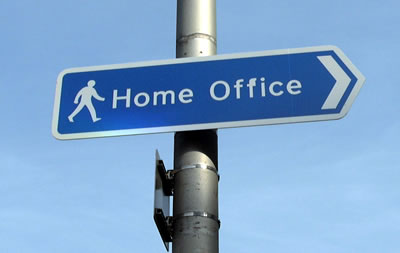
After our wedding, we had to visit the Home Office in Croydon, known as Lunar House. Housed in a 1960s nondescript office building, the Home Office is the mecca for all non-UK citizens who want permission to remain in the country. We arrived bright and early one September morning to find a queue already snaking all the way to the car park. We joined the queue and waited to be filtered into the general direction we needed to go.

I was there to get the Leave to Remain status necessary for my passport and job future. Under the terms of a fiance visa, I was not allowed to work in the UK until we were married. I still harboured hopes of starting up a career in my new country, though what exactly I wasn't sure. It seemed to take hours to make my way to the front. Along the way, I watched and listened to the others shuffling along with me. One Australian girl was taken out of the queue and deported immediately. She'd overstayed her visa, and there was nothing her English boyfriend could do for her.

At last my name was called, but it wasn't me they wanted to speak to -- it was my hubby. I could just about make out the civil servant's question: "Are you satisfied with the marriage?" he asked my husband. I nearly laughed out loud. What an absurd question to ask, I thought. But, bear in mind that these questions are formulated with arranged marriages in mind probably. Fortunately, hubby answered without hesitation in the affirmative. I then got the coveted Leave to Remain stamp in my passport and letter, which is somewhere in the house.

This was it. I truly had made the commitment to stay. Yet as the bleak winter months set in, I had my doubts. And continued to have them into spring. It didn't help that my in-laws weren't speaking to me at all. My social life consisted of going to the pub with hubby and his mates and playing darts. OK for some, but I like female company too. I started going to an aerobics class and met a woman who introduced me to a local American woman. I latched onto this woman like a fox to a chicken. She must have been put off by my desperation because she made it clear she really wasn't interested in friendship with me. However, she did do me a huge favour by suggesting I go along to my local Citizens Advice Bureau and see about volunteering.

All this was supposed to be temporary until some new career came along. Not that I was looking too hard. First, there was our honeymoon to plan. I wasn't allowed to leave the country until I had the Leave to Remain status. Once that was achieved we had to decide where to go. Hubby had always wanted to go to India. I wasn't so sure but wanted to go where Hubby went. So we went to India for three weeks. Two of them were spent travelling around the Golden Triangle -- Delhi, Jaipur, Agra with a small village called Mandawa thrown in. Then we spent a week in Goa, sort of like Florida in the 1950s. While in Goa I got food poisoning very badly and lost 10 pounds in two days. A doctor was called to our room; he gave me an injection, and 45 minutes later I was right as rain.


When we got back from India, I went for my interview at the CAB. The CAB, for those of you who don't know, is a charity that was started as a free and confidential source of advice and information on just about anything from bus schedules to debt counselling to employment tribunals. I thought I'd just be doing some typing, but the manager wanted me to do the full training. The CAB informed my life in so many ways. I liked the idea of people having somewhere to go even for just a chat if that's what is needed.

I don't know if I could have found a better way of getting acquainted with the British way of life. Certainly, I learned a lot about the UK welfare benefits system. Like Child Benefit, which doesn't exist in the U.S. Child Benefit, if you don't know, is a tax-free monthly payment to anyone (regardless of income) bringing up a child. And the difference between Income Support and Jobseekers Allowance. And how being on Income Support gives you the ticket to other free benefits: free prescriptions (which cost £6 something now but were only £4 when I arrived -- that's £4 for every and any drug prescribed, my fellow Americans. I nearly passed out), free school meals, etc.

But I learned about more than benefits. I learned about people. We had our regulars -- lonely elderly people, local alcoholics looking for somewhere warm to rest their feet (till one peed in the waiting room and was banned), mentally ill people on a day out. They could, if allowed, take up quite a bit of time. We weren't a particularly busy bureau when I started so it didn't matter so much, but a new manager changed all that. Our regulars got squeezed out as we started to be more proactive and offer more services. My colleagues were mostly recently retired men and women who wanted to keep their brains active. A few of them took me under their wing and showed me the ropes. For many years the highlight of my week was the two afternoons I spent there. I enjoyed seeing people, looking up information, writing up case sheets, laughing with my colleagues. When I had my daughter, one colleague volunteered his wife to look after the baby one afternoon a week so I could still go to the bureau. They are still very close friends.

But office politics exists even in the voluntary sector. Rumblings started about a loss of funding and merging rival bureaux to save money. One manager left; another took her place, then he left. Another manager came but there wasn't enough money in the pot to pay him so he left. Then a woman I'd started out volunteering with took over. It was one management change too far. With two children in school, I had different priorities and time pressures. I couldn't make all the meetings and training sessions. I didn't want to stay behind to write up my case sheets. I lost the zeal I had felt at the beginning, and if you're a volunteer that's what you're there for. So I left after eleven and a half years. I didn't even get a goodbye card after all that. Oh, I cried that night.

But those years weren't a waste of my time. The CAB was instrumental in helping me settle in to this country. I formed lasting friendships with some of my colleagues. I learned a lot. I gave a lot.

Saturday, 8 March 2008

Moving to England: Who Loves Ya, Baby?

February 1994. I am in a hotel room in Paris. Tony Blair and his New Labour supporters are on TV bopping to "Things Can Only Get Better." I am hungry. Very hungry. Unusually hungry. Hubby and I have walked all over Paris. It is my first visit to the city, and I have fallen in love with it, especially the food. No sooner have I swallowed the croissants and cafe au lait than I'm wondering where and when our next meal will be. During the visit I have grown a bit slack about taking my temperature every day, something I've been doing for six months in an effort to get pregnant. In the back of my mind, because I won't allow myself to fixate on it, is a question: Could I be pregnant?

Back in dreary England, I buy a pregnancy test. It's supposed to turn pink, and when the slightest hint of pink appears I start yelling and crying.

And so began my worries. How could I have a baby in Britain? It's practically a third-world country, my hormone-laden mind reasoned. But I was, and I was going to get a crash course in pregnancy and birth, NHS-style. I knew some Americans who had opted to go privately to have their babies in the UK, but I wasn't going to be one of them. From what I read (and I read voraciously in those days) it didn't make much difference.

I started to see the midwife at my doctor's surgery. I didn't exactly take to her, but when I first heard my baby's heartbeat, I forgave her some of her shortcomings. Mid-pregnancy I saw a registrar (not quite a consultant or fully qualified doctor). This would be the only time I saw a doctor throughout my whole pregnancy. I remember him checking my breasts for lumps through my bra, which I found very strange. But I was finding a lot of pregnancy strange, particularly the changes to my body.

In the beginning the NHS didn't seem all that interested in my pregnancy. I had to wait over an hour for my two appointments at the hospital. I had only one scan during the whole pregnancy. The seeming indifference was at odds with my hormones.
The midwife was professional but not very personable. I later found out that she was living with the father-in-law of a friend of mine. As he was about to become a grandfather for the first time, he wasn't too keen about starting a new family with her. Her unhappiness showed through in her professional life.

I couldn't wait to wear the pregnancy leggings I had bought when I was two months pregnant, and as I was eating for two, it didn't take long before my jeans wouldn't zip up. I became obsessed with all things American. My baby would have to have a pushchair (stroller) and carseat bought in America. On a visit home when I was four months pregnant, we purchased the stroller. My husband bought the carseat on a subsequent business trip. My stepsister was also pregnant with her first child. She lent me "What to Expect When You're Expecting" because, of course, how could I have a baby without reading this book? It wasn't available in the UK yet. I discovered a magazine in the UK called Mother and Baby. This also was required reading. When I don't know about a subject, I read all I can find. And what did I know about birthing babies?

I craved American food -- burgers and fries, pancakes and maple syrup, Budweiser beer (I didn't drink it, just craved it), New York pizza, Krispy Kreme doughnuts, Saltine crackers, Oreo cookies.

When I wasn't eating, I fretted that my child would grow up reading different books from what I read as a child. When friends with children would talk about feeding them fish fingers and sausages for "tea," I swore to myself that I would never feed my children such things and I would never call dinner "tea." I wasn't feeling anti-British, just pro-American. I suppose it was insecurity.

An acquaintance told me about the NCT (National Childbirth Trust). This charity is dedicated to helping promote breast feeding and giving antenatal classes and breast feeding counselling. Many areas have weekly coffee mornings for new and not-so-new mothers. I started going to these when I was eight months pregnant as a way to meet people in the area. I also rang up when I was four months pregnant to reserve a spot in the antenatal class. I was told by the ditsy woman to call back in three months. When I did, she said all the classes were fully booked and why did I wait so long.

No matter. I'd become acquainted with another NCT antenatal counsellor and she gave me a private session. I also went to the NHS antenatal classes and discovered I wasn't the oldest mother in Wirral after all. I made some dear friends in that class. There were two young girls in our class, one who had been taught in primary school by one of the other women in the group. The NCT classes concentrated on making up a birth plan. The NHS classes talked about pain relief. Good thing I listened because I went through just about every available kind while I was enduring a very long labour. I tore my birth plan up.

Nobody mentioned what you were supposed to do once you had the baby or how to assemble a pushchair (stroller) while holding a screaming baby. Or how to put the carseat in the car. And nobody said that breast feeding can be as or more painful than labour. Hubby and I went to a Parentcraft evening at the local hospital where they showed us the birthing suites and the midwives proceeded to tell us they never breastfeed and opt for a epidural if offered.

My mother came over a week before I was due. I had laboriously typed up a list of how to work everything in the house, even the front door key. She blithely ignored it and looked at me every time the phone rang as if to say, "Aren't you going to get off your fat ass and answer that?"

The first labour pain came at 2 a.m. on Oct. 12. I got out the TENS machine I'd rented and Hubby hooked me up to it. It did absolutely nothing for the pain. Two hours later I was on all fours in the hallway huffing and puffing. My mother got up to use the toilet, but I was in the way. She gingerly stepped over me. We decided it was time to go to the hospital. Hubby rang ahead and I got into the back seat, still on all fours. The midwife examined me and proclaimed that I was "maybe" two centimeters dilated. She suggested I go home. I tried to get dressed but the pains came again. So I got into the bed (they'd put me in a side room). Hubby tried to comfort me but I didn't want anyone touching me. I stayed in that side room for the whole of the day. That evening they decided to move me to a birthing room. I got hooked up to an oxytocin drip and was given diamorphine for the pain. When I threw up everywhere, the midwife on duty said, "Oh yeah, I forgot to tell you that can happen."

I saw lots of midwives during that labour, which lasted about three shifts. Eventually, I got an epidural. I hated the epidural. I lost all feeling below the waist, which didn't help with the pushing. When the big moment arrived, there was lots of activity in the room, and several doctors appeared. Apparently, my baby was in distress. They wanted to use forceps, but I said no. The doctor said she'd try the ventouse (suction) but if that didn't work, it would have to be a caesarean.

After about an eternity, my beautiful baby girl popped out at 10:23 a.m. on Oct. 13 with her eyes wide open. Others would comment on her pointy head, the temporary result of the ventouse, but she was my gorgeous girl, and still is.

A midwife came along and said she would bathe my baby and I was taken to a ward to await a private room. I needed to wee and was placed on a bedpan because I still couldn't feel my legs. And I was left on the bedpan for a very long time. I couldn't move myself off it. When I asked for the bedpan to be taken away, I was met with a very stroppy attitude. Eventually, the private room became available and we moved my things in there. I cleaned the sink first thing. The room might have been empty, but it was filthy. Now, where was my baby? They still hadn't bathed her. I requested that she be moved to my room. Hubby and I eventually bathed her at 9 p.m. that night. Staff shortage? I think so.

I became a bit more familiar with the workings of the hospital during my prolonged stay there. They wouldn't let me go home, or else they forgot I was there. I had trouble establishing breast feeding, and each member of staff had a different idea or method. In fact the breast feeding wasn't established till my daughter was five weeks old and I contacted the local NCT breast feeding counsellor. The community midwife wasn't much help, and would comment if she arrived in the morning and I wasn't dressed yet. I relaxed once I started seeing the health visitor instead of the midwife. The health visitor was a wise, calm woman.

Twenty months later I was back in the same hospital in labour again. But what a different experience. I'd had a scan when I was nine weeks pregnant, then another one when I was 22 weeks along. I didn't go to the antenatal classes (no time with a toddler at home). No doctor tried to feel my breasts through my bra. I had the same community midwife but she was a changed woman. She was in a happy relationship and soon would be pregnant herself.

I started losing amniotic fluid at about 38 weeks. I had bronchitis, and the cough was making me pee -- or so I thought. A friend suggested I go to the hospital just to be sure. I'd had the odd pain but took some paracetamol (Tylenol). I did NOT want to have my baby yet. My mother hadn't arrived (though she wasn't much help the first time), hubby had an ear infection, and I had no one to help me. But this baby had to come out, they said. They hooked me up to an oxytocin drip again. I was by myself because hubby was at home putting Gorgeous Girl to bed. I started to cry. A passing midwife tried to reassure me. Hubby appeared eventually, but nearly passed out because of the earache (excuse me? He did NOT know what pain was). I had gas and air, then pethidine at the end for pain relief. Still, it hurt. A lot.

Sonny Boy had the cord wrapped round his neck. The midwife fixed this quickly and efficiently. Then after I'd been torn in half delivering him, she syringed his mouth and nose. A quick check revealed a heart murmur. We had to stay the night to see if it resolved itself. I got a private room again. A couple hours after I'd settled in, I heard a commotion next door. A woman was losing her baby. The pregnancy was advanced, and she had to give birth. She cried; her husband cried; her whole family cried. I know this because it was hot in my room. The windows wouldn't open so I had to leave the door open. The midwives kindly offered to take my boy off my hands. I think they wanted to spare the woman next door from hearing any babies crying. But I wondered why she was on a maternity ward anyway.

Breakfast time came. I asked for a piece of toast. The midwife said I could get up and get it myself. I explained I'd been pushing hard for five hours and was a bit unsteady on my feet. She got me the piece of toast. A doctor from India came and checked Sonny Boy's heart. The murmur was gone. We could go home. Yippee!

Except at home I had a sick husband, toddler with conjunctivitis, collapsed drains (so no running water or toilet) and no one to help me. Somehow I survived. My mother arrived a few days later. She helped with Gorgeous Girl. My mother-in-law called to find out how the baby was, the toddler, my husband. She didn't ask about me, not once.

The friends I'd made from my first pregnancy came round. Some offered to take Gorgeous Girl off my hands. I welcomed the break because Gorgeous Girl had decided it would be fun to wake up in the night. I would stagger from one room to another. Hubby snored on.

Sonny Boy was the perfect, sleeping baby for two weeks. Then he met my mother-in-law and woke up. He didn't sleep through the night till he was 2 years old. Any guess as to why I have only two children?

I found support through my NCT coffee group, my other friends, my GP, and my health visitor. They helped me through the difficult days of early motherhood. My own mother or even my mother-in-law could have done more for me, but they didn't reach out or were out of reach. Still, we survived, and I gained a perspective on my new country previously unknown to me.

Wednesday, 5 March 2008

That Was the Year That Was

Hello. This is my new-look blog that I'm trying out. I got bored and depressed with the old one. I hope to add a few other elements at some point. This month marks my one-year anniversary of blogging. What an up-and-down year it's been.

Last March I wrote about not much at all, and I don't think anyone read them. I was timidly trying out a new forum, but didn't really get into the full swing for a while. I was a lonely blogger.

In April we went to Barcelona and London, where I saw Menopause the Musical. I also wrote about the VTech murders and David Halberstam's death and the death of journalism as I knew it.

May saw the kidnapping of Madeleine McCann, my daughter and her friends viewing something unsavoury on the internet, Bill Moyers' address to the graduating class of SMU, and my uncle's unfortunate death from cancer. Problems with my mother were starting to brew.

In June I ran in the Race for Life, argued with my daughter, argued with Colin, who used to contribute to Snuffleupagus' blog, got my first tag (from Debio, who sadly has ended her blog. Where are you, Debio?), went to my 30th high school reunion, celebrated my son's 11th birthday, met Pixie's blog, bemoaned the state of my house and the other gym bunnies' habits getting in the way of mine. I wrote about our local cross-dresser (there are several videos of him on YouTube, some a bit cruel), my daughter going to a disco, and the book "Falling Down" by Don DeLillo. I went to my son's primary school play, the last primary school event I hope to ever attend.

July came and Pixie tagged me to tell seven fascinating facts about myself. I uncelebrated the Fourth of July. The problems with my mother were in full swing and I wrote about what to do about her. The problems I was having communicating with my daughter were also coming to a head. I became a Rockin' Girl Blogger and wrote about rain, rain, rain, then one day of sun.

In August we went to Wyoming and Florida. While in Wyoming we took a side trip to Montana to visit the Little Bighorn Battle site. On the way back through Yellowstone we saw some black bears by the side of the road. Rhys Jones died in Liverpool in August, and still his killer has not been found. Hubby and I celebrated our 15th anniversary and I bought him a bottle of Cristal champagne (and proceeded to drink most of it myself). I started to read a book called "Freakonomics," which tickled me.

I did a poll in September as to whether we should get a dog. I also got up late on my daughter's first day back at school. I shared an article on the Holy Land theme park in Florida. I also got to meet Pixie for the first time in person. I remembered what happened on Sept. 11, 2001 and put some perspective on it. I wrote about Crazy Jill, a woman who made my life miserable for a while but now is not part of it. I won DJ Kirby's Wordless Wednesday caption. I pondered my blogging family tree, and I convinced hubby that we should get a dog. I expressed my concerns about Hillary Clinton (which I still have).

On Oct. 1, I wrote about Jake, our new puppy. He was only seven weeks old and only cost £30 (but a heck of a lot more in vet bills to come). I considered finally getting my British citizenship, but was put off by the ridiculous test questions you're expected to answer. I started to write about my experiences as an American ex-pat, but not in any organised fashion. I moaned, particularly about Frenemy. I explored a side of my family tree that I had known about but hadn't given much thought to (my dad, my grandfather, and my great-grandfather all remarrying women who didn't like the children from their first marriages much). My daughter turned 13 and the turbulence of the past year started to settle. I wrote about how hubby and I met. A frequent contributor to Snuffleupagus' blog made me contemplate Xenophobia.

November started with a bang as I argued with my daughter's head teacher over why she should be allowed into her school disco, despite losing her ticket. I got tagged by -ann to list eight things in different categories. It was a tough post to write, as I recall. I told the tale of our trip to Amsterdam in 2005. November was when hubby first heard he might be out of a job soon. Back then they gave him till the end of the year.

December and I was moaning about my sister. I was tagged by DJ to write a letter to my 13-year-old self, a rather difficult assignment. I also wrote of boyfriends past in between moaning, something I seemed to do a lot of last year.

Jake dictated his New Year's resolutions in January. Rob Clack tagged me to write seven unusual facts about myself. Kaycie and I celebrated a birthday on the same day (January 8). I participated in my first Fun Monday and wrote about the website that has changed my life (amazon.com). In my second Fun Monday I took a very dark photo of the view from my front door. On my third Fun Monday, I revealed my inner (and outer) slob with photos of what's on my bedside table. I remembered reading "Cross Creek Cookery" in my mother's bedroom. I also revealed my support for Barack Obama and bemoaned the urban legend emails that won't die (this one allegedly from Johns Hopkins University).

February came, and well, what a month! I wrote my Kick the Bucket List for Fun Monday and started my erstwhile Moving to England series. My husband and daughter were in a car accident. I lost our passports in Italy. I got knocked down while skiing. My mother had a biopsy on a lump on her breast. Oh, and my husband was told his job is definitely going.

What a year! A lot of it was pretty boring. I moaned way, way, way too much. Along the way I made some blog pals. Some are still around; some have moved on. Such is life in the blogging world. But I'm still standing.

Tuesday, 4 March 2008

Time to Breathe

I want to get back to my Moving to England series, but have hit a bit of a block. I wrote a whole post about childbirth and then realised it was total crap. Back to the drawing board.

Things aren't as dire for Hubby as they could be, but there's still time for that. His job won't end till the end of March and maybe in April. That gives him a bit of breathing room for finding another job. We got through February, and nobody died. I keep telling myself that.

In the meantime I'm learning who my friends are and aren't. Remember the whole Edna, Mildred, Gladys soap opera? I was worried because I was going skiing with Mildred, a longstanding friend, and her friend, Gladys, who is mortal enemies with Edna, a friend of mine. Well, I got on fine with Mildred and Gladys on the holiday. When I returned I met up with Edna, who wanted to know how I got on with Gladys. I said fine, no problems. Well, Edna was very upset by this and burst into tears and said Gladys always does this and takes all her friends away. I said Gladys hadn't taken me away, and Edna said, "She did. You like her now." And, yes, it was as childish as it sounds. I tried to comfort her and reassure her, but in the back of my mind I was thinking, "I've just told you my husband is about to be out of a job, and this is what you do to me?"

I don't feel I was in any way disloyal to Edna. I did not discuss her with the other two. I was relieved to get on with the other two because it's an awfully expensive holiday to go on and have a bad time. I didn't hang out with them all the time. But Edna is trying to make me feel guilty. She emailed me later to "apologise" for her behaviour, but it didn't exactly sound like an apology.

I feel bad for Edna. I told her no one should have that much control over her emotions. And I can see myself a bit in her behaviour. Yes, I have felt upset enough with people to want to prevent others from being their friends. And I can see now that that is wrong. My mother did the same thing to a longstanding friend of hers. One time my grandmother was visiting my dad and my stepmother. My stepmother asked her if there was anyone she wanted to see, and she said yes, this friend of my mother's. My stepmother took her over there, and this friend, being a very generous person, entertained them both. My mother found out about it and cut the friend right out of her life. It's self-destructive behaviour, the kind my mother specializes in.

I wish I could help Edna come to terms with her anger and hurt. Sadly, I think she is the only one who can do that. Also, sadly, I think she will lose more friends -- perhaps even me -- before she will do that.